PIM unleashes the full potential of product information, benefiting your business for at least these five reasons
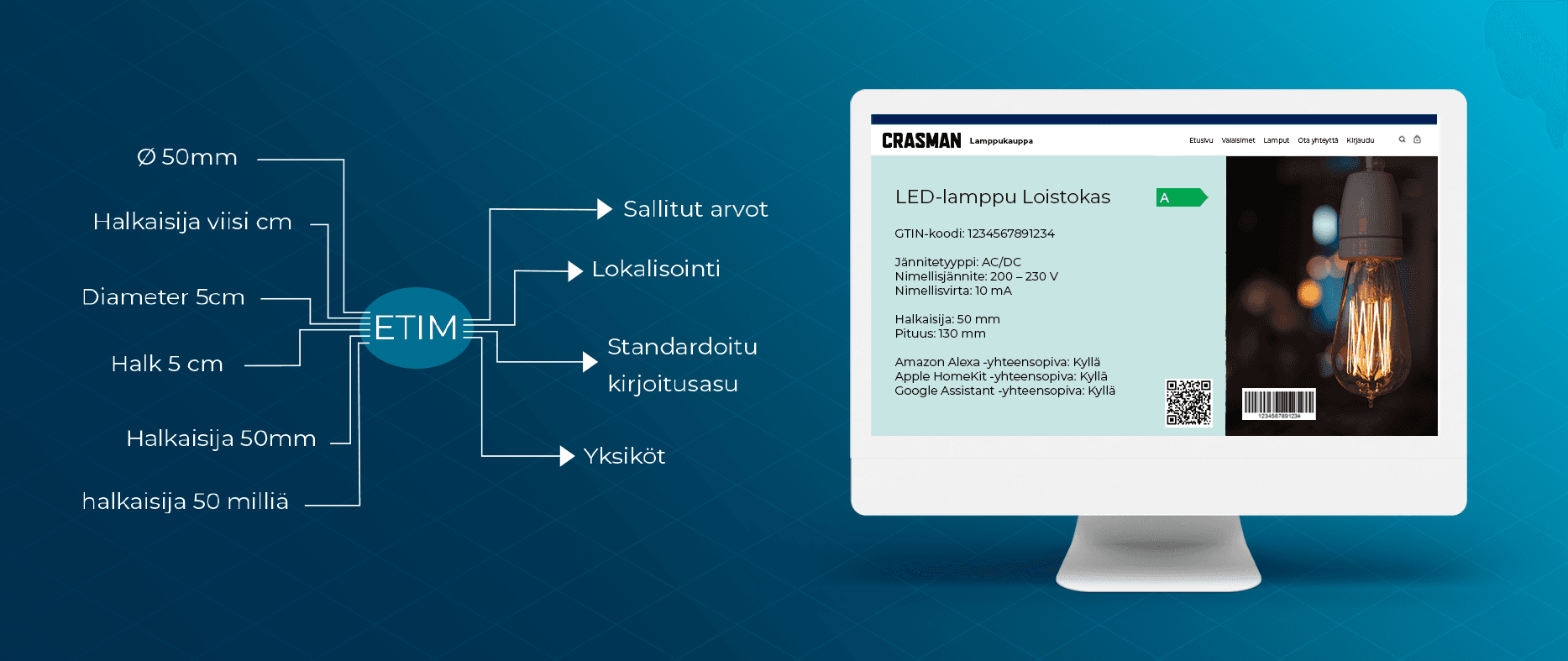
PIM (Product Information Management) is one of the keys to e-commerce success and the master of high-quality and rich marketing data. It allows you to centralise product information in one place and distribute the information according to channel-specific requirements.
PIM is an efficient tool for developing and managing product experiences in a multi-channel environment. It helps you centrally manage a growing range of channels and a rapidly changing operating environment. The implementation of PIM has been proven to reduce customer returns by up to 40%, as the most common reason for returns is poor and incorrect product information.
Enhancing product experience is at the core of the customer journey
Product information is crucial when your customers search for and compare products or services. High-quality product data improves your e-commerce visibility in search engines and attracts visitors by offering sensory experiences with various inspiring images.
In addition to the quality and comprehensiveness of product information, your customer is interested in transparency and responsibility. Therefore, provide verified product reviews, warranty information, certificates, and details about the product's origin, materials, and manufacturing processes in your e-commerce.
Product information travels with your customers throughout their journey on your e-commerce site:
PIM solves your five biggest challenges
With product information management, you can achieve significant benefits for your business. The easily accessible benefits would remain unattainable without automation and data-driven approaches.
1. Customers find products easily:
Use product attributes maintained in PIM as search filters in your e-commerce to enhance product discoverability and ease comparison.
2. Updates from one place to everywhere:
Update product information in just one place, and it automatically moves through interfaces to all channels. Each product has a unique identifier that enables order management, tracking, and data integration between different systems.
3. Leverage seasons and increase sales
You can easily create product sets and various options such as size and colour variations or offer curated orange and black product variations during a Halloween campaign.
4. Highlight products based on margin
With product relations, you can highlight products with better margins and related spare parts or even additional services.
5. Expand your market area internationally
Do you have customers visiting your e-commerce from different countries? No worries! With PIM, you can localise products, manage translations, handle unit conversions such as from centimetres to inches, and manage product assortments and images specific to each channel.
We explore the influence of various marketplaces, such as Amazon, on product information management and the role of PIM in the 'PIM as a Source of Information for E-Commerce' webinar. Download the webinar recording.
Did the topic resonate with you? Would you like to discuss how enriched product information can help increase sales? Get in touch.

Anni Laine
People & Culture Manager