AI as the Accelerator of Car Sales: Efficiency, Content and a Better Customer Experience

Selling used cars online is, frankly, a bit of a nightmare. SEO competition from the big portals is fierce, the product itself is complicated and expensive, and your data sources are all over the place. Every car is its own unique snowflake, and keeping track of all that information is a proper headache. AI won’t solve everything — nothing ever does — but used smartly, it can make life considerably easier. In this post, we suggest three solutions that are already perfectly achievable right now.
1. Automating Sales Processes and Backend Systems
Robotic Process Automation (RPA) has long been used to handle the sort of repetitive, mind-numbing tasks that no sensible human wants to do — particularly when two systems simply refuse to talk to each other through integrations. That said, robots aren’t exactly great at thinking on their feet or reading between the lines. This is where AI comes in. A brilliant example is managing vehicle listings through the intake and publishing process. Gathering, enriching and completing vehicle data could all be handed over to AI right now. It’s faster than a human and makes considerably fewer embarrassing mistakes. The salesperson or buyer is then left to do the bit they’re actually good at: validating the data and getting on with the actual business of selling cars.
2. Getting Found in the AI Age
Traditional search engine optimisation (SEO) has a new companion: AI-powered search, or Generative Engine Optimisation (GEO). The question isn’t just how to rank on Google anymore — it’s how to make sure AI assistants actually recommend you when someone asks for help. Both search engines and AI tools are looking for the same thing: genuinely useful content that answers real questions. Good for customers, good for lead generation. As it turns out, being helpful pays.
A great practical example is the vehicle description texts found on Beely’s site. AI takes the dry, technical spec sheet — engine size, equipment lists, the works — and turns it into something a real human being actually wants to read.
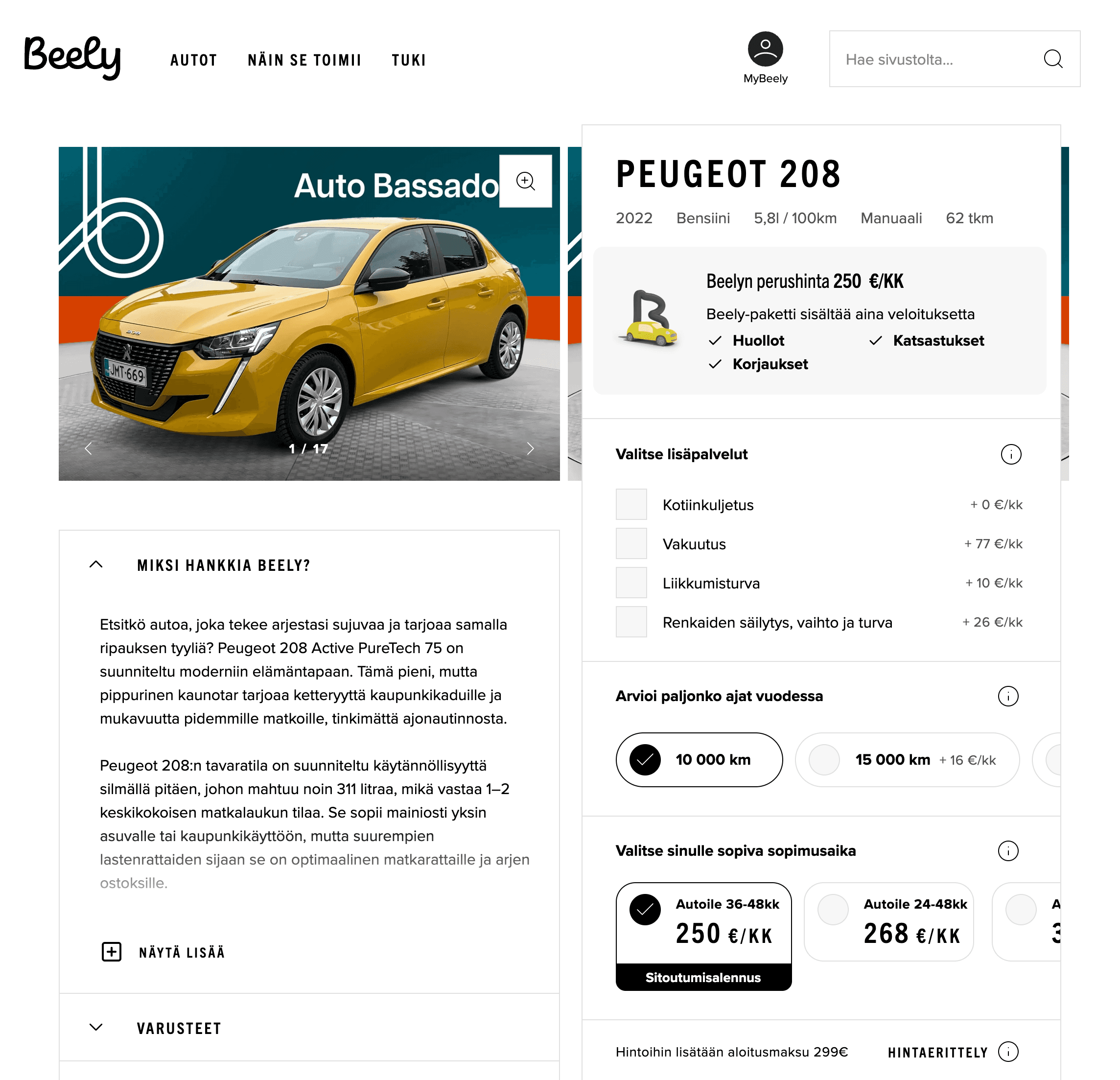
AI also opens up a whole new world of content that simply wasn’t feasible to produce before. In the same way, texts can now be easily generated for make- and model-specific car search landing pages. Both examples above also happen to be cost-effective from an AI-usage standpoint, since the content can be created once and served to thousands of visitors without anyone lifting a finger.
3.Helping Buyers Compare Cars
Buying a used car takes an average of nearly three months from first thought to purchase (AutoTrader’s “Vehicle Path to Purchase” study). A whopping chunk of that time is spent comparing options.
The things buyers typically want to compare include vehicle size, load capacity, towing capacity, and how well the car suits their actual lifestyle — including hybrid and EV battery technology. Safety ratings, equipment specs and running costs also factor in heavily. Cars typically lined up for comparison are:
Different model years of the same car model
Nissan Qashqai 2007-2013 vs. 2014-2020 vs. 2021-2025
Volvo XC60 2010-2017 vs. 2018-2025
Similar cars from different brands
Skoda Octavia vs. Volkswagen Golf vs. Toyota Corolla
Audi A4 vs. MB C-series vs. BMW 3-series
Different models from the same brand
Toyota Corolla vs. Toyota Auris
Skoda Octavia vs. Skoda Superb
AI can easily generate landing pages comparing 10 to 20 interesting cars from your own stock. Before publishing, you can still do a quick sense-check to make sure everything is accurate and safe to put out there. You can also include clear disclaimers about the AI involvement, so nobody’s surprised.
These pages serve a very specific purpose in model-level lead generation. But they also do something rather clever: they provide genuinely useful content that helps buyers make up their minds faster, while positioning the dealership as a knowledgeable, helpful expert rather than just another car lot.
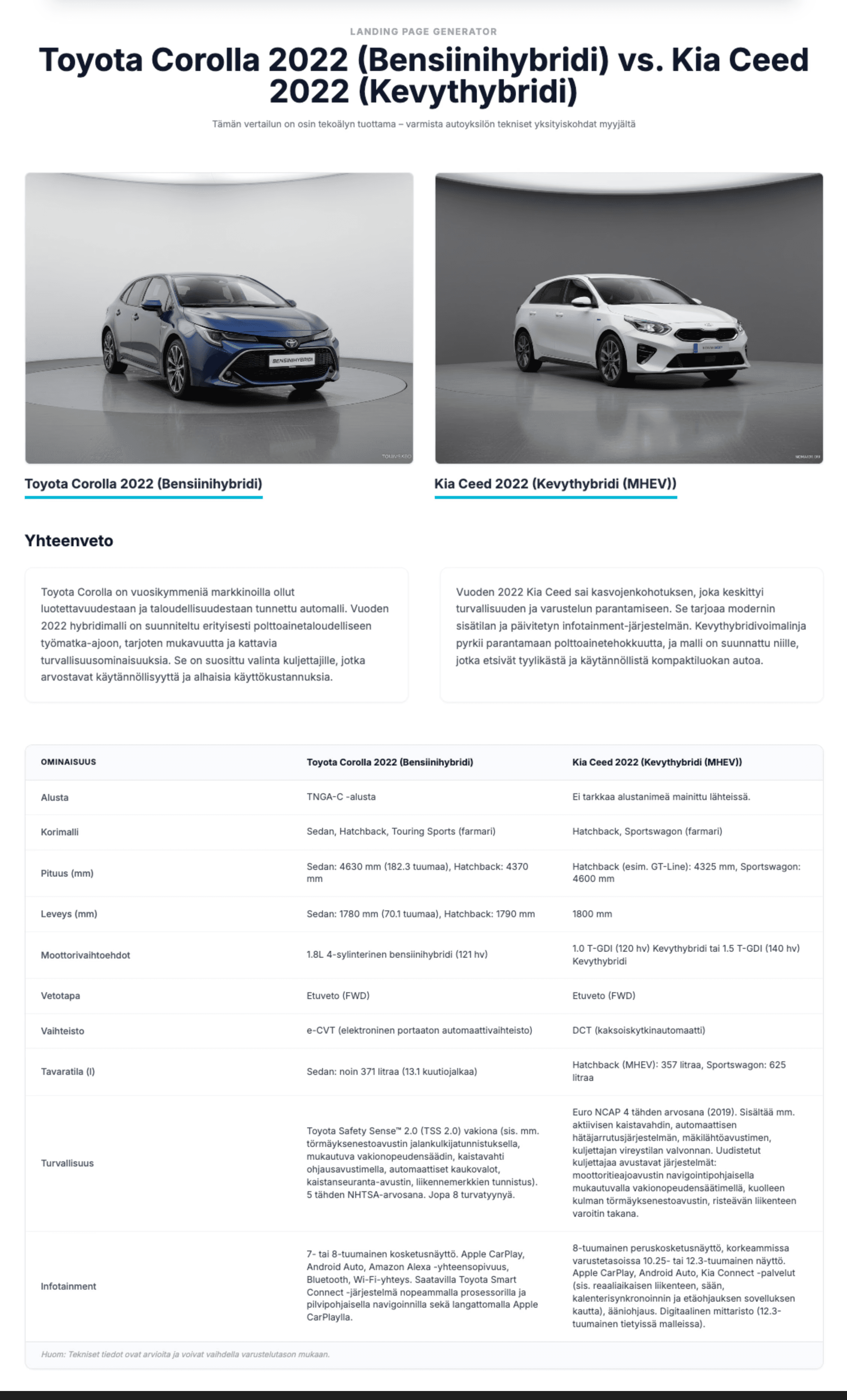
Everything shown in this example can be created with a tool like Google Gemini. The results get even better when the AI is fed your own DMS data.
Closing thoughts
The examples presented here are already fully achievable today. They are largely based on pre-generated static content, whose costs and resource requirements are easy to manage and predict. Real-time generative AI is also making its way into web services. In the context of car retail, this could mean, for example, putting AI to work for every customer in the form of a conversational car search that identifies their needs. Another significant trend is enabling agentic commerce. As a first step, this could mean allowing AI to handle things like test drive bookings and car reservation payments. But we'll return to these topics in future blog posts.

Teemu Korpilahti
Director of Development